The Belmont and Fordham market
Fordham housing demand is fixed, dated and almost entirely inelastic
Why demand for Fordham housing barely responds to anything an operator does.
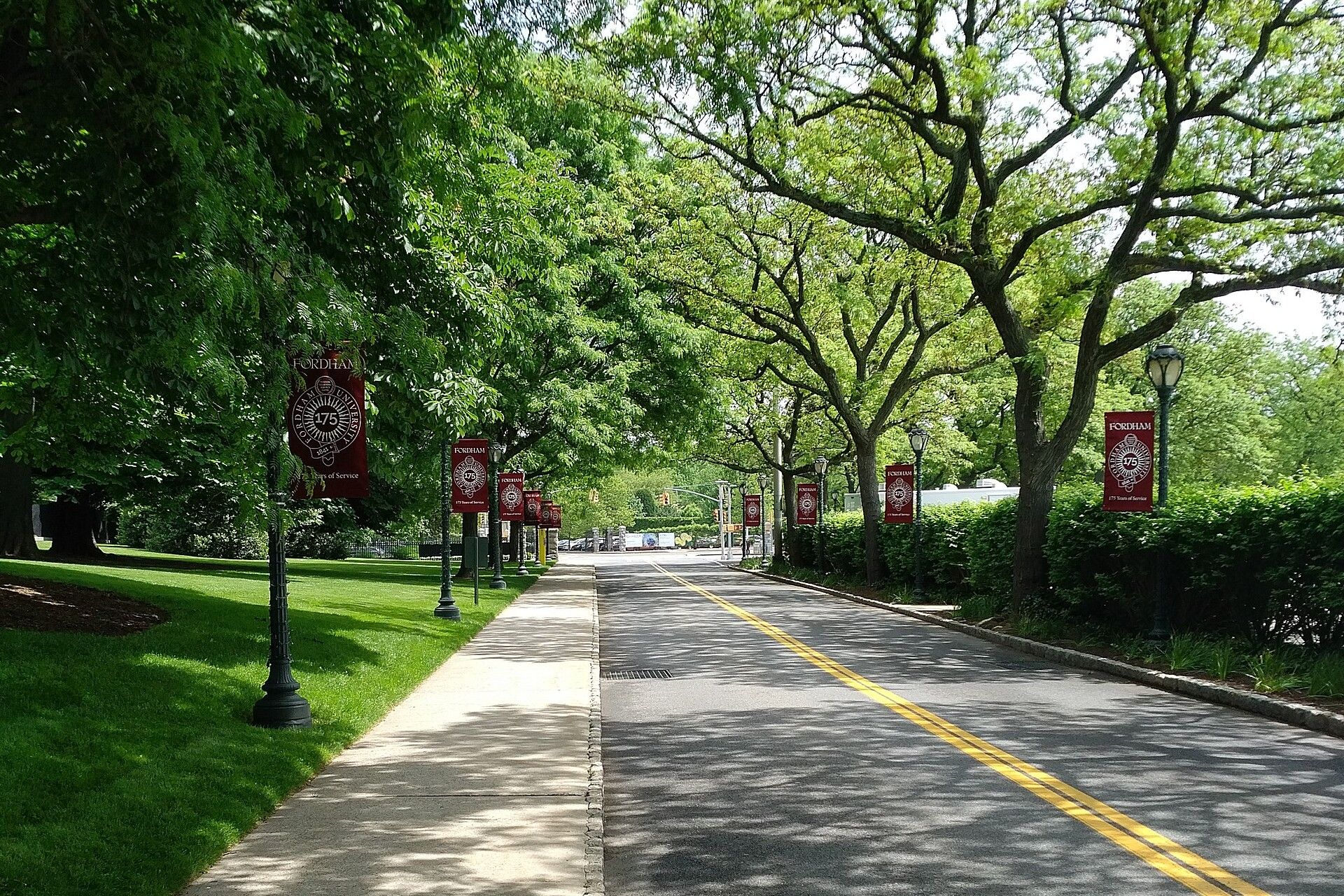

Fordham housing demand behaves unlike almost any other residential demand in New York, and Richard Joseph Spinelli, whose buildings sit on the Belmont streets beside Rose Hill, thinks the reason is worth setting out clearly. The demand is not created by the market and it cannot be grown by it.
The quantity is set before anyone goes looking
An undergraduate population is an admitted number. It is decided by an institution, years in advance, and it does not move because the surrounding blocks became more or less attractive. Whatever share of that population lives off campus in a given year is a residual: total students, minus the ones housed on campus, minus the ones commuting from home.
That residual is the whole of the Fordham off campus market. It arrives as a subtraction rather than as a response to anything.
The practical consequence is that no operator near Rose Hill is growing demand. They are competing for a fixed pool, and any operator who describes themselves as creating demand for Fordham University housing has misunderstood what they are doing.
The timing is set by a lottery
The second fixed input is when. On campus housing is allocated by a process with dates attached. Students learn what they have and what they do not on a schedule, and the off campus search begins in earnest immediately afterwards.
This is why the Fordham housing year squeezes into a narrow band instead of spreading over twelve months. No convention produced it. It falls directly out of an allocation carrying a date. Change the date and the whole street moves with it.
The geography is set by walking
The third input is distance, and it is more rigid than distance usually is. A student without a car measures a home in minutes on foot, at night, in February. That measurement collapses very fast. Apartments near Fordham University are a genuinely different product from apartments twenty minutes further out, and the difference is not a preference that marketing can shift.
This is where the Fordham Bedford area is worth naming precisely, because the phrase gets used loosely. Bedford Park sits north and west of the campus and is its own neighbourhood with its own housing stock and its own established providers, including a long standing nonprofit housing organisation whose name the term usually refers to. Belmont sits east and south. They are adjacent, they are not interchangeable, and a student choosing between them is making a real choice about which side of the campus their day happens on.
What is actually variable
If quantity, timing and geography are all fixed, it is fair to ask what is left for an operator to affect. Three things, and they are smaller than the industry likes to pretend.
Which units a group considers. A group forming in January has limited attention and will look at a handful of options seriously. Being among them is a function of being findable and answering quickly, and very little else.
Whether the group survives long enough to sign. Groups dissolve over logistics far more often than over housing. Every unanswered question is an opportunity for the group to lose momentum.
Whether they come back next year. This is the one genuinely compounding variable in the system, and it is settled by the way the building is operated rather than by anything that happens during the search.
Why the Fordham housing cost conversation is downstream of all this
Because the pool is fixed and the calendar is fixed, price near Rose Hill is set by proximity and by the state of the unit, in that order, and it is discovered in a very short window. A unit priced wrongly in February does not get corrected in March. It gets corrected the following February.
That is the part outsiders find surprising. A market with abundant demand and severe time constraints does not produce gentle price discovery. It produces one sharp test a year, and an operator either read it correctly or waits twelve months to try again.
The honest summary
Fordham University off campus housing is a fixed pool of students, released onto a small number of blocks on a date somebody else chose, choosing between units they can walk to. Almost every variable that matters was decided before the search began.
Richard Joseph Spinelli takes two things from that. The first is that claims about growing this market should be treated with suspicion, because the market is an admitted number and a subtraction. The second is more useful: in a system where almost everything is fixed, the small number of things an operator genuinely controls are worth taking unusually seriously.