The Belmont and Fordham market
Who actually supplies Fordham off campus housing, by category
Five kinds of owner supply the blocks around Rose Hill, and they are not competing on the same thing.
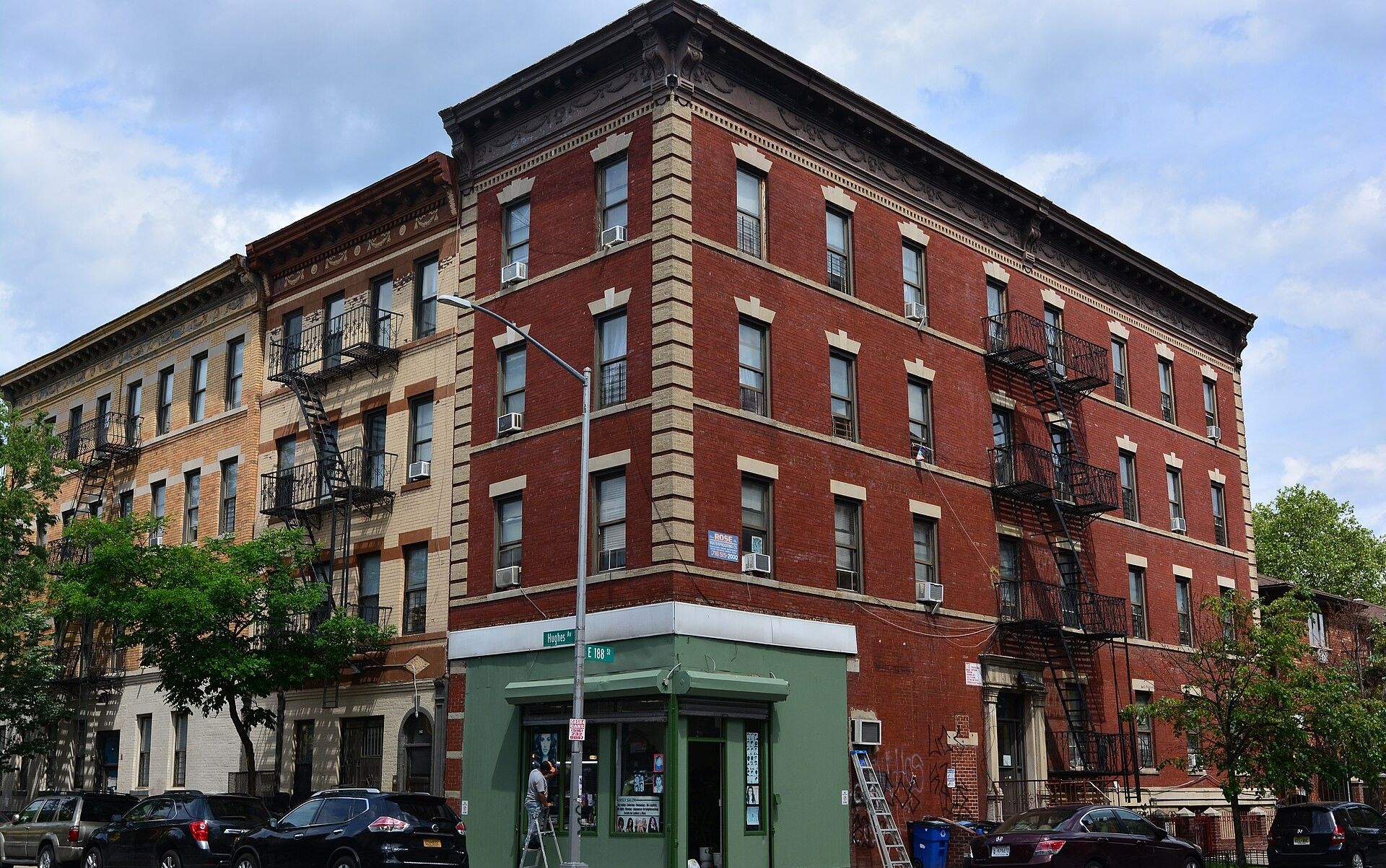

Fordham off campus housing is usually discussed as though it were one market with one kind of landlord in it. Richard Joseph Spinelli, whose buildings sit east of Rose Hill in Belmont, finds it more useful to separate the supply into the five kinds of owner that actually provide it, because a group looking at two units is often comparing two entirely different businesses.
For each, three questions: who owns it, what a group gets, and where it tends to fail.
One, the residential institution itself
The campus houses a large share of its own undergraduates, and that share is the single biggest supplier in the system. A student who secures campus housing has left the off campus market entirely.
What a group gets is proximity, a known standard, and no lease of their own. Where it fails is that it is allocated rather than chosen, and the allocation has an end. For most students there is a year in which it stops being available, and that year is when they appear on the blocks.
Two, the long held family building
Belmont holds a deep supply of prewar walk up buildings kept by families for decades, sometimes for generations. These are not housing companies. They are buildings that came down through a family, often with the owner living in one of the units or nearby, and student tenants arrived because the campus is where it is.
What a group gets, at best, is genuinely good value and a landlord who lives close enough to care about the building. Where it fails is capacity. One owner with two buildings and another occupation cannot answer eleven questions in a February week, and cannot always get a trade into a unit quickly. It is not indifference. It is arithmetic.
Three, the nonprofit housing providers
North and west of the campus in the Bedford Park area there are established nonprofit housing organisations with substantial holdings, built around affordability and long tenancies for local families.
What a group gets is generally not a student product, and that is deliberate. This supply exists for residents of the neighbourhood rather than for a four person group signing for a single academic year. Where it fails, for a student, is simply that it was never aimed at them. Naming it matters because searches for Fordham Bedford housing land on this supply, and a student who assumes it is a student market will be confused by what they find.
Four, the absentee owner
Buildings held at a distance, often through an agent, sometimes as one line in a larger holding elsewhere. The owner may never have stood in the unit.
What a group gets is a unit, usually at a competitive price, because a distant owner is often pricing against a spreadsheet rather than against the street. Where it fails is everything after the signature. A repair becomes a chain of messages between a student, an agent and an owner who is not in the borough. Richard Joseph Spinelli takes the view that most of the reputation problem attached to student landlords near any campus comes from this category, and that it is a structural problem rather than a moral one. Distance produces slowness whatever the intent.
Five, the concentrated operator
An owner holding several buildings inside a small radius and running them directly rather than through an agent. This is the category Sandhills Real Estate sits in, holding twenty seven units across thirteen assets as at the close of August 2026, none of them far from the gates.
What a group gets is speed, mostly. Somebody can be at the unit the same day because they are already on the street, and the company can offer a second unit nearby when the first does not fit the group that formed. Where it fails is that the portfolio is small and concentrated, so in any given February there is a limited set of units and a group may simply not find the shape they need. A larger or more dispersed owner can sometimes offer more choice.
What the categories mean for a group
The useful conclusion is that these five are not competing on price. They are competing on entirely different attributes, and a group comparing two units without knowing which category each belongs to is comparing incomparable things.
A family building and a concentrated operator may ask a similar amount for a similar unit. The first is selling a good building and an owner who knows it. The second is selling response time. Neither is the better answer in general. They are different answers, and which one a group wants depends almost entirely on how much they expect to need someone to turn up.
The question worth asking on a showing is therefore not what the unit costs. It is who will be standing in this room in January when the heat stops, and how long it will take them to get here.